

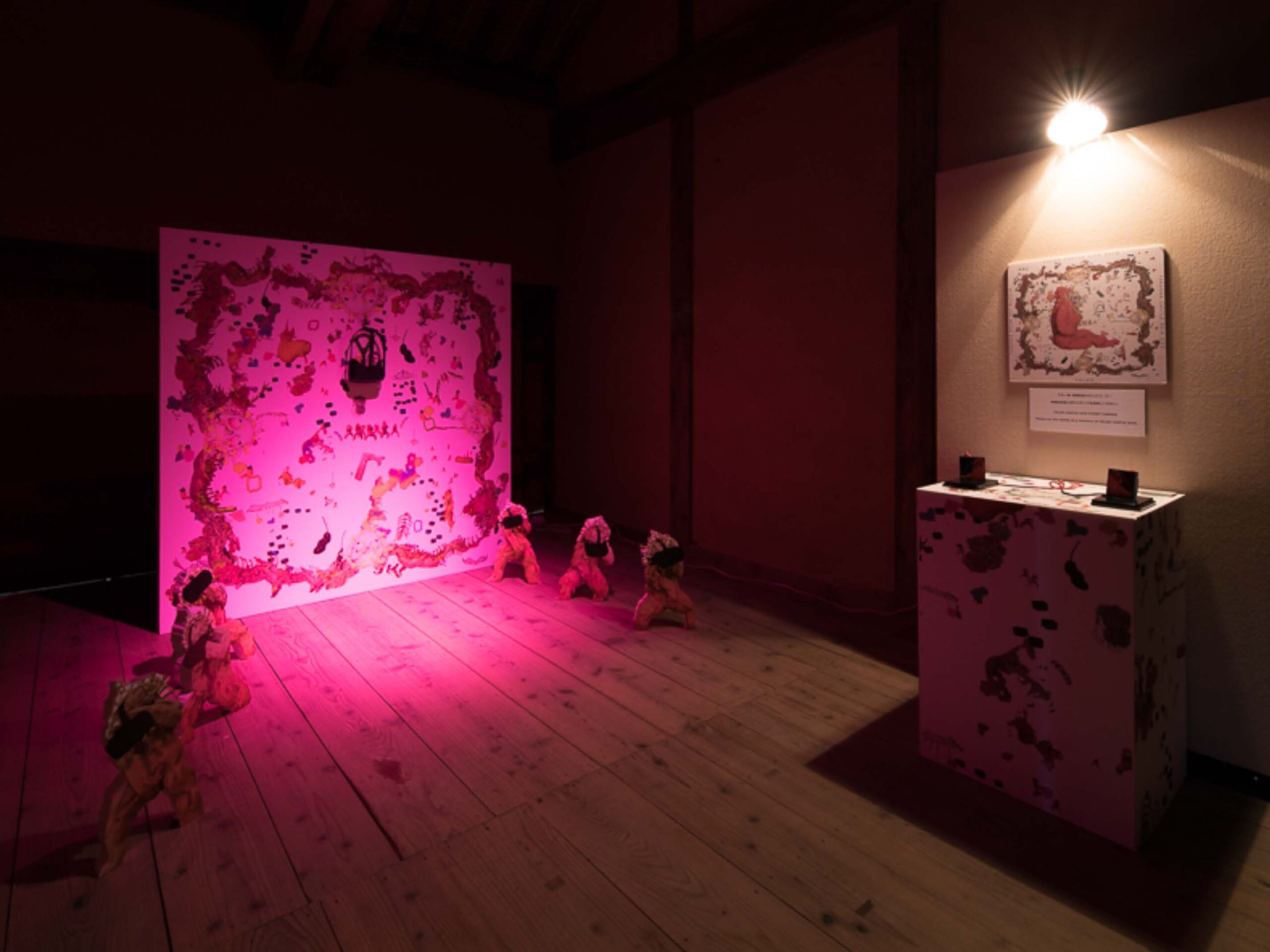
 Photo Courtesy by Yaloo, Fukuoka Foundation of arts and culture promotion, Fukuoka Asian Art Museum, Fukuoka City Art Museum
 옛 성터같은 역사적 장소는 과거, 현재, 미래에서 동시에 존재한다. 크고 작은 역사적 사건들을 지나온 후쿠오카 성터는 내가 태어나기 전에도 내가 죽은 후에도 그 자리에 그대로 남아 관객을 맞을 것이다.
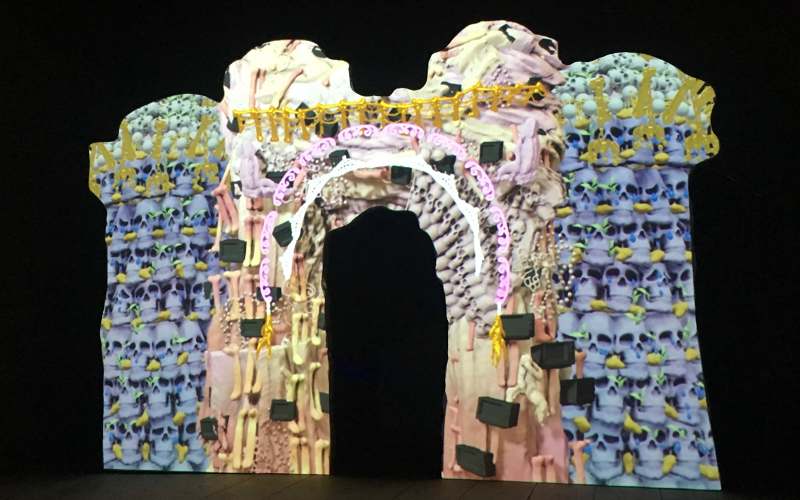
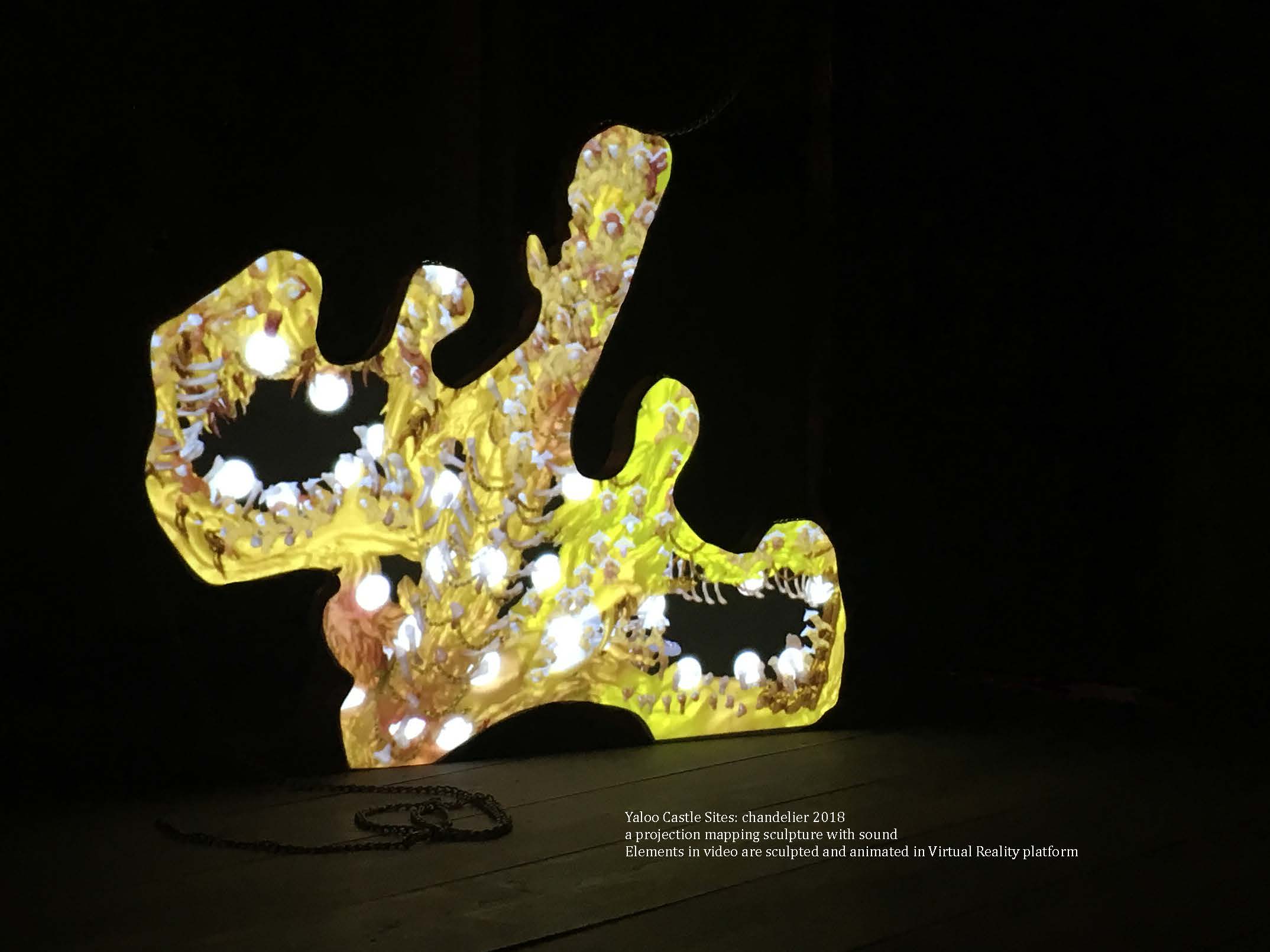
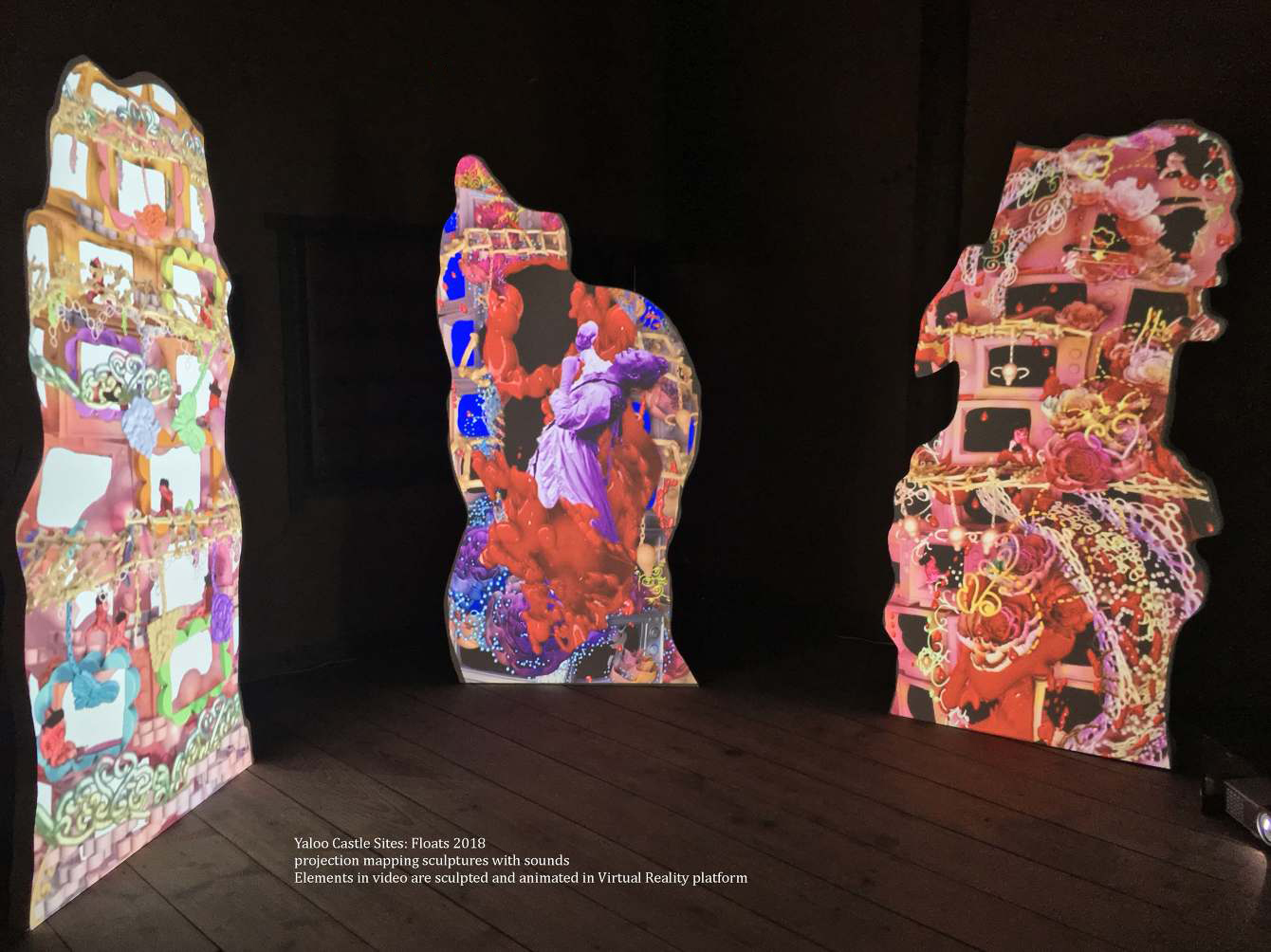
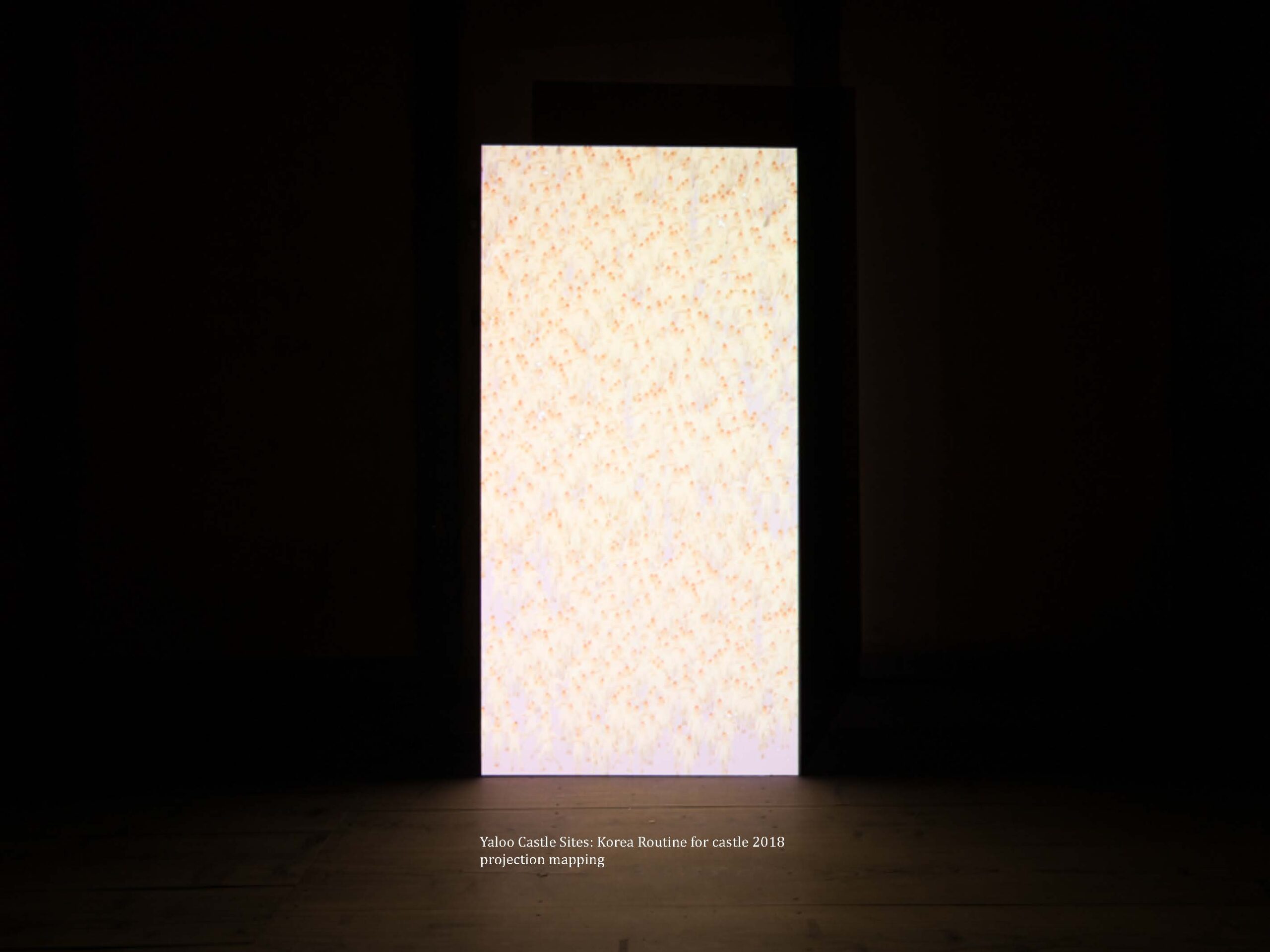
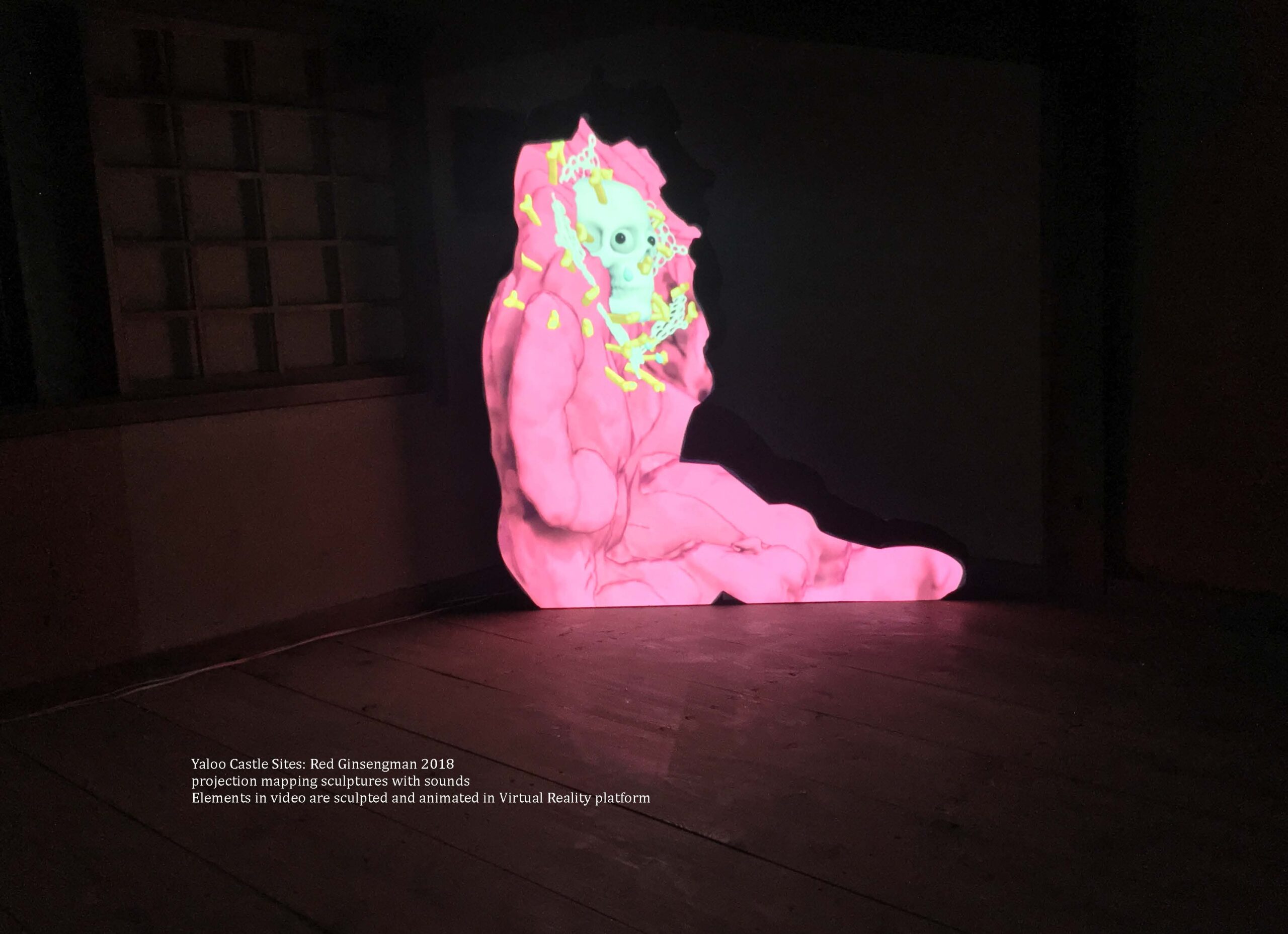
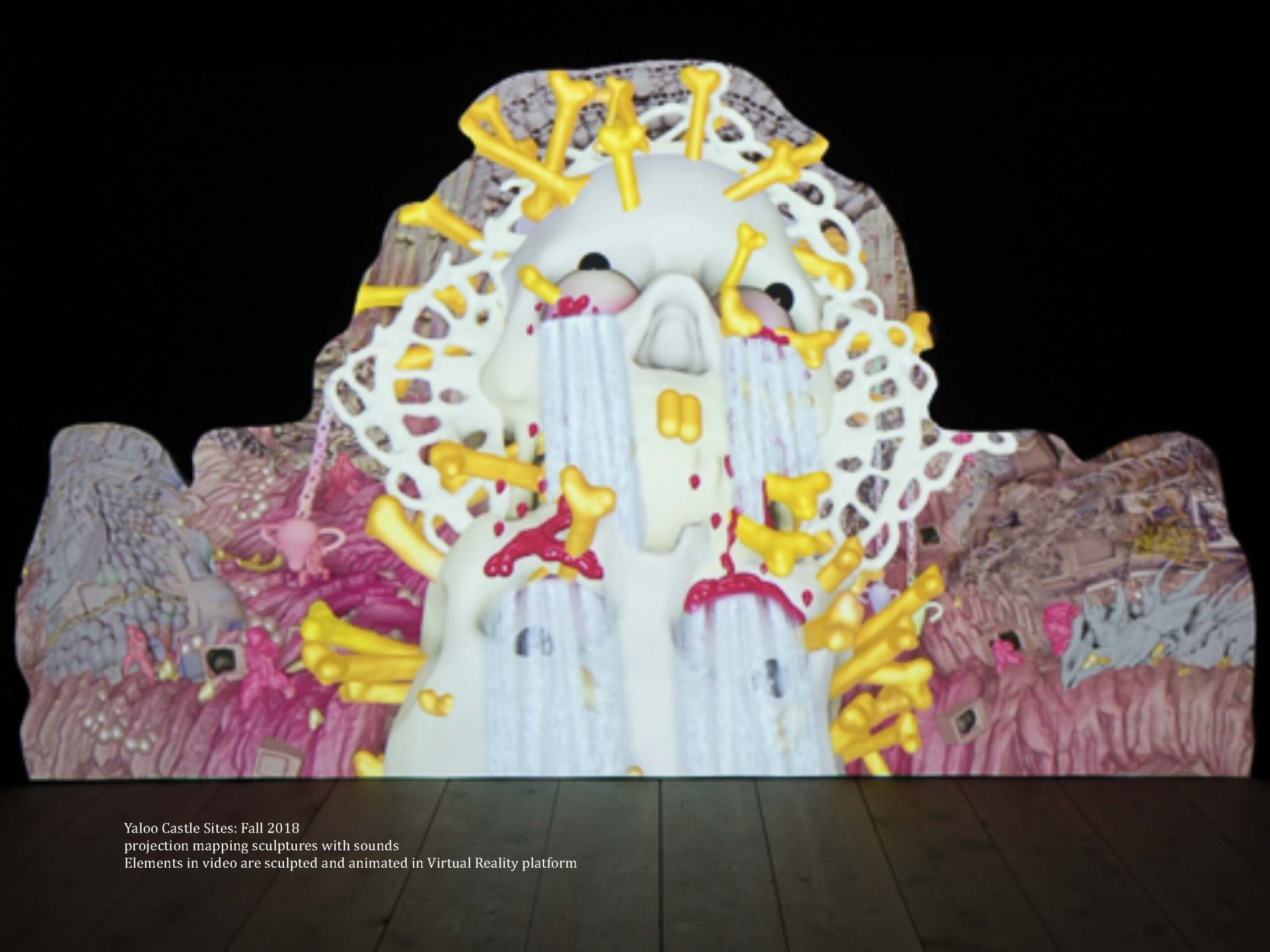
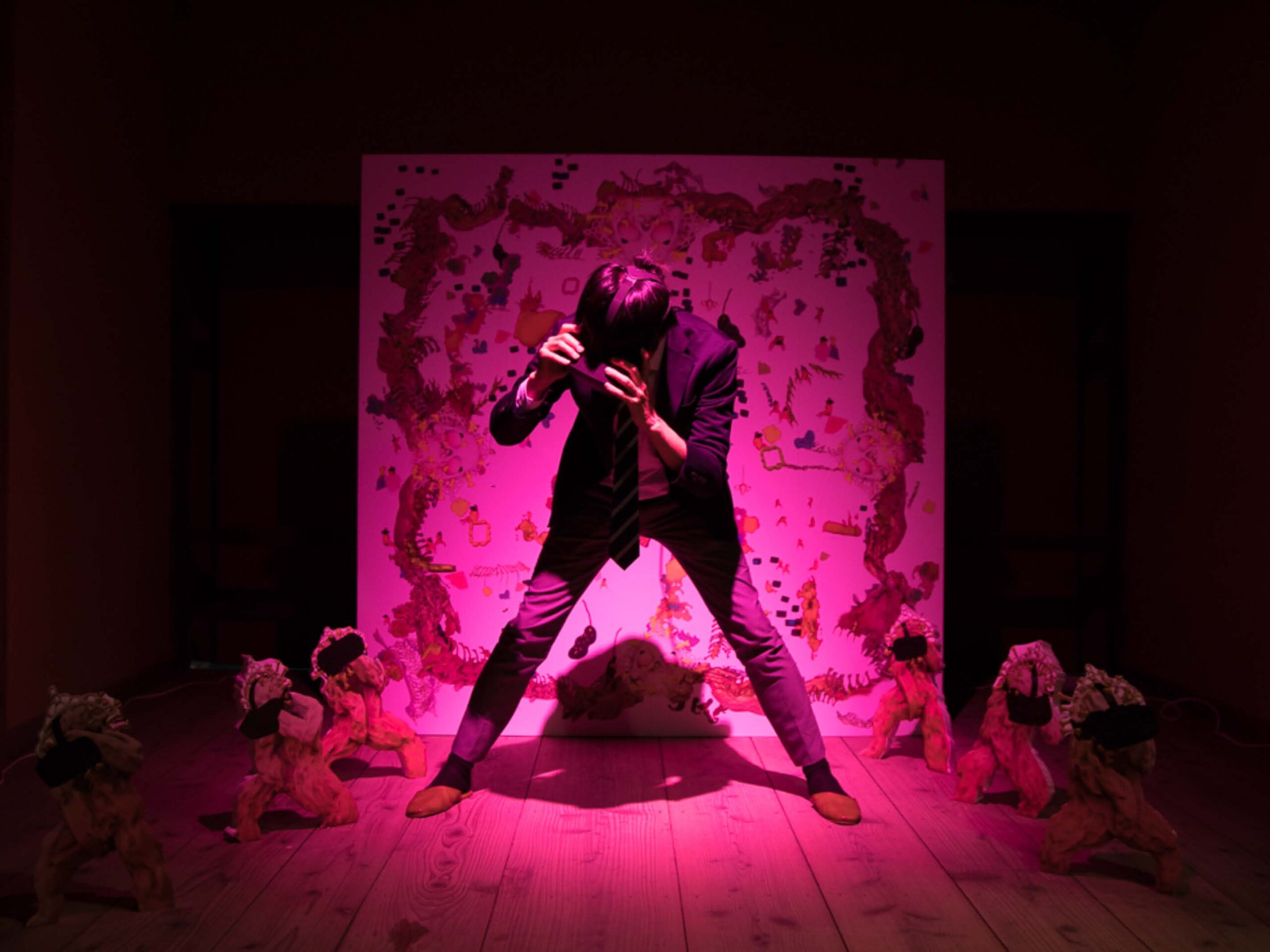
봄꽃 축제 기간에 맞춰 복원작업을 기념하여 후쿠오카성 건물 내부에서 전시를 꾸렸다. 2017 여름의 후쿠오카 아시안 미술관 레지던트 아티스트 활동 기간을 소우주로 삼아 당시의 연구와 경험을 바탕으로 일련의 가상의 역사적인 유물을 비디오 프로젝션 맵핑 조형으로 만들었다. 관객이 일방통행으로 설계된 방에 설치된 유물을 차례 차례 경험하면서 작가와 관객은 함께 기술과 상상력에 힘을 빌어 가공의 소서사를 엮어낸다. 마지막 방에서 VR 헤드셋을 통해 가상 고고학 사이트에 들어가 대안 세계를 통한 여행을 완료한다. 전세계 뉴미디어아트 작가들의 축제인 롱비엔날레 2019에 GIF 버전으로 선보였다.
본 작품은 아래의 재단의 도움으로 제작되었습니다:
후쿠오카 예술 문화 진흥 재단
후쿠오카 아시아예술 미술관
후쿠오카시 미술관
인천문화재단
Playful Attack – Yaloo in Fukuoka
In March 2018, Yaloo Castle appeared in the Fukuoka Castle Ruins in the midst of the flowering cherry blossom season. The Fukuoka Castle was built in the early 17th century and is one of the major historic sites in Fukuoka. It evokes a certain romantic sentiment of a great era. Though the main castle buildings, including its tower, have been lost, surrounding stone walls and some buildings remain today through regular renovation. Yaloo turned one of these historic building into a haunted mansion which was uniquely pop and grotesque at the same time.
Such a style was also apparent in her previous project Yaloopark, Yes! Sebum exhibited at Fukuoka Asian Art Museum in 2017. Inside the dark Yaloopark, Yes! Sebum, the visitors encountered an animated strawberry that produces sebum from its seeds, like an oily human nose, or the animated yuzu lemon, the surface of which turns into human skin covered with inflamed acne. Yaloo turns what is essentially ill-favored into a kind of entertainment, shifting the visitors’ mentality to accept it as something enjoyable.
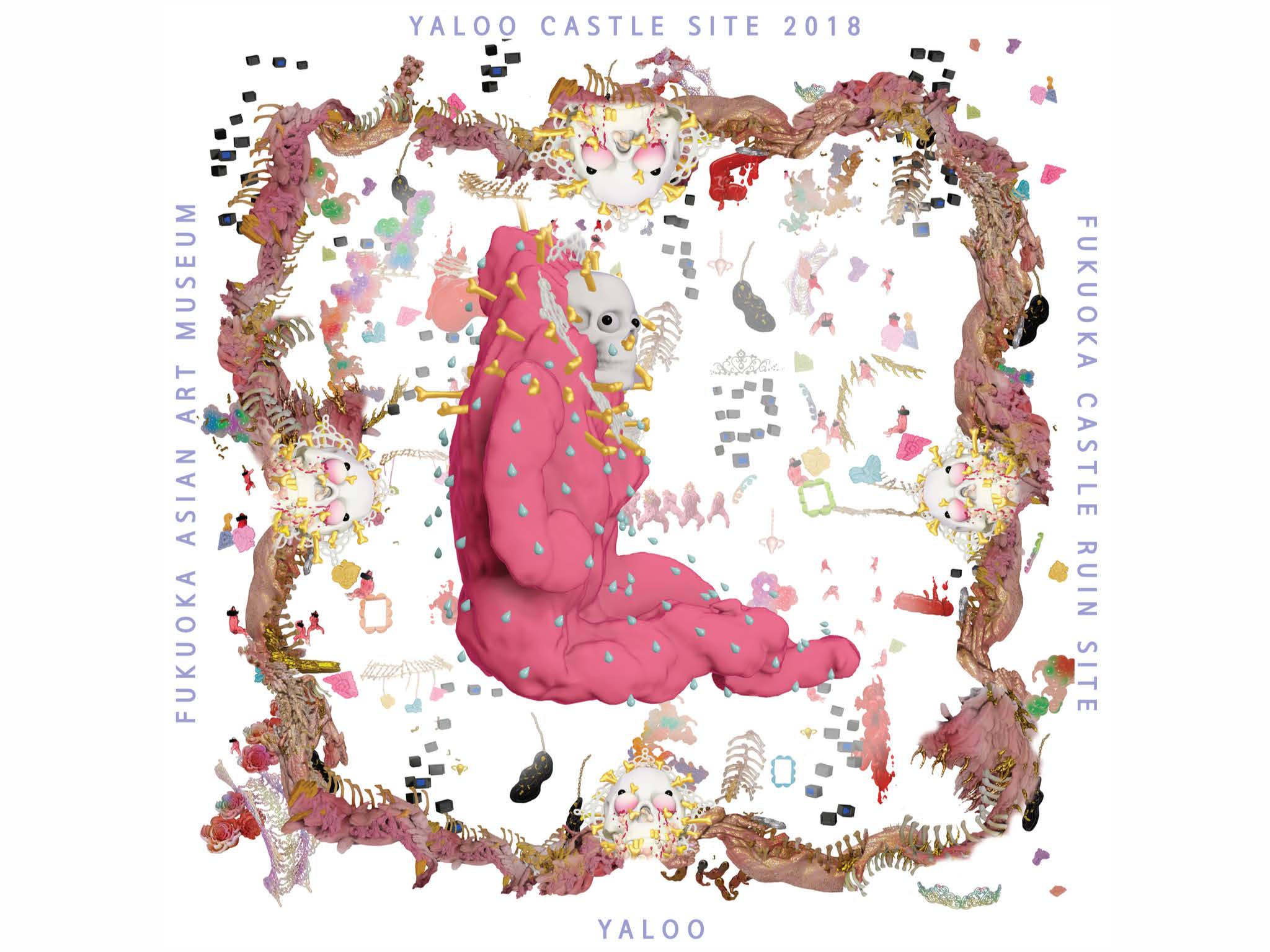
In the haunted Yaloo Castle Site visitors encountered a skull faced character with a pink body. Is it a ghost from the Warring States Era? Yaloo says, “The skull is a reminder of who we are, and what we are.” This remark turns what we first observed as someone else’s matter into our own, just like the Planet of the Apes was, in fact, a future earth. While the skull appears to be cute and entertaining, it obtains a certain criticality by implying our own mortality. Yaloo Park, Yes! Sebum similarly used the images of female skin and fruit in a critical sense to reflect a consumer mentality that seeks superficial beauty.
In a contemporary society with highly advanced technologies, our desire to be more beautiful, younger, and healthier are limitless. Corporations are constantly creating new products, sounds and images to accelerate these desires. However, technology cannot defeat the limits that all living things must obey. In this sense, technology simply postpones these problems. What people in power in the past did to gain an eternal life appears to be unrealistic and funny from today’s point of view. However, what we are doing within the framework of global capitalism will inevitably look silly from the perspective of future civilizations. Yaloo’s art takes a humorous approach to these ironies of human existence.
Another interesting aspect of Yaloo’s work is how she composes the images. For instance, in Yaloo Castle Site, skulls were assembled with visceral objects such as organs, blood, and secretions. Yaloo’s work often shows a chimeric compound of elements that are not essentially unifiable, such as skulls and grotesque organs, comparing the dry and the wet with death and life. Disparate objects share a certain time and space in Yaloo’s work to achieve an unnatural unification while leaving obvious differences between them. Where does such sensitivity come from?
Yaloo was born and raised in Incheon, Korea. She then moved to the United States to study contemporary art at the School of the Art Institute of Chicago (SAIC) where she majored in video and animation. Yaloo’s unique sensitivity behind her idiosyncratic characters might have been influenced by her experience of living in two countries, Korea and the United States. Living with multiple cultural backgrounds that are not necessarily consistent with each other might have formed her deformed yet unique multi-layered style without fully adapting one identity.
Fully-bloomed pink cherry blossoms surrounded the Fukuoka Castle Ruins during the exhibition of Yaloo Castle. Cherry blossoms represent a fleeting life and beautiful death. What Yaloo presents is the opposite, that is, an essential grotesque-ness of human life hidden under our skin. Yaloo’s work turns such realities of our society into something playful and entertaining while keeping critical attitude towards it. It holds a power to lightly go beyond the occluded social situations. A sentimental beautification of life or death, or melancholic memento mori mentality is not the Yaloo style.
NAKAO Tomomichi (Curator, Fukuoka Asian Art Museum)
Project made possible by
Fukuoka Foundation of arts and culture promotion
Fukuoka Asian Art Museum
Fukuoka City Art Museum
Incheon Foundation of Arts and Culture, South Korea
